File 03 · AMD Developer Hackathon Act III · Track 1 · Oct 2026
Operion
A maintenance copilot that catches a pump fault 36 hours early, explains it with checked evidence, and tells the supervisor whether to repair or replace.
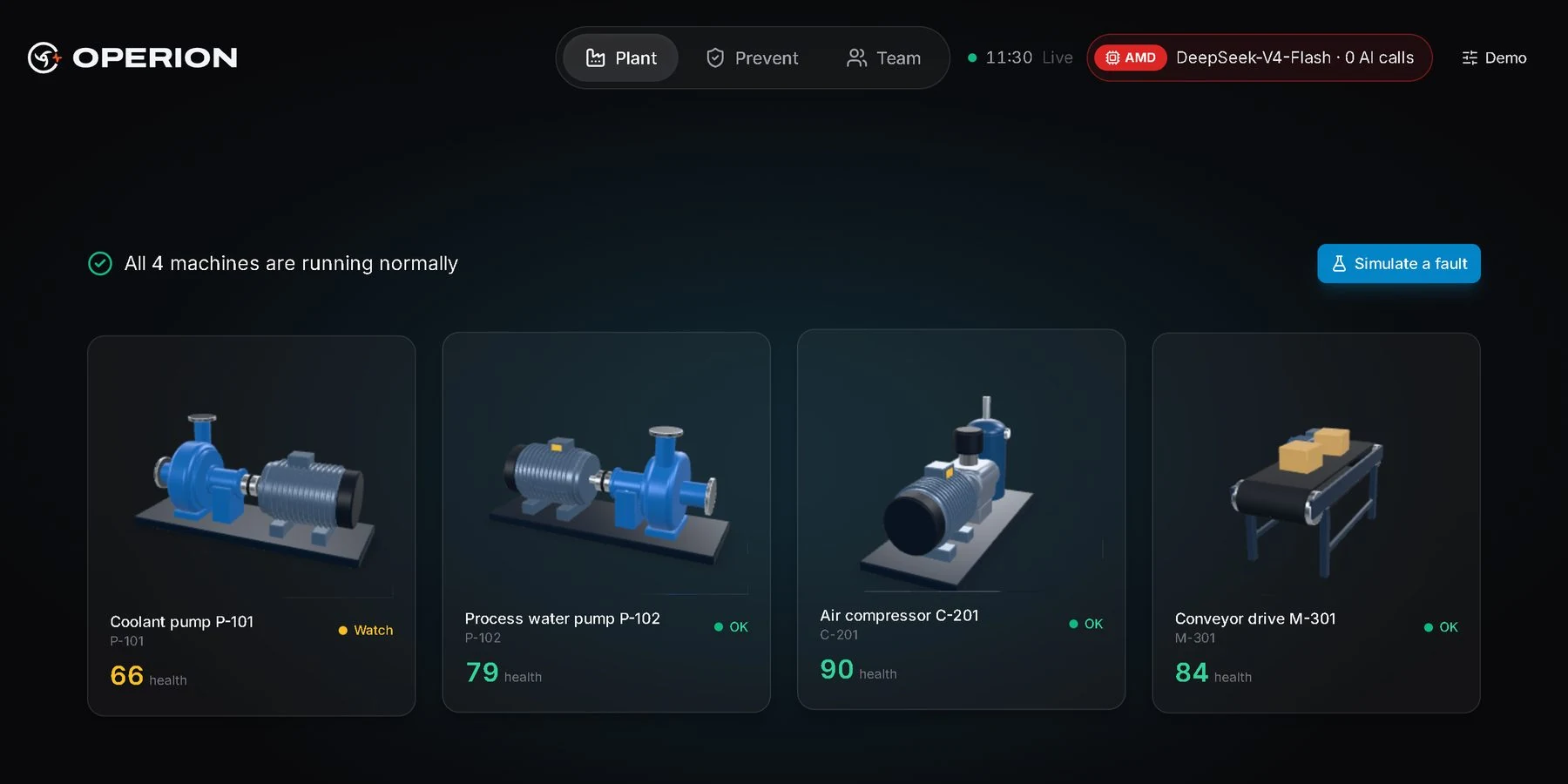
- 36.4 hmedian warning, vs 6.2 h for the legacy alarmSimulated
- 40/40faults caught before failureSimulated
- 97.5%correct diagnoses, 0 false alarms in 720 hSimulated
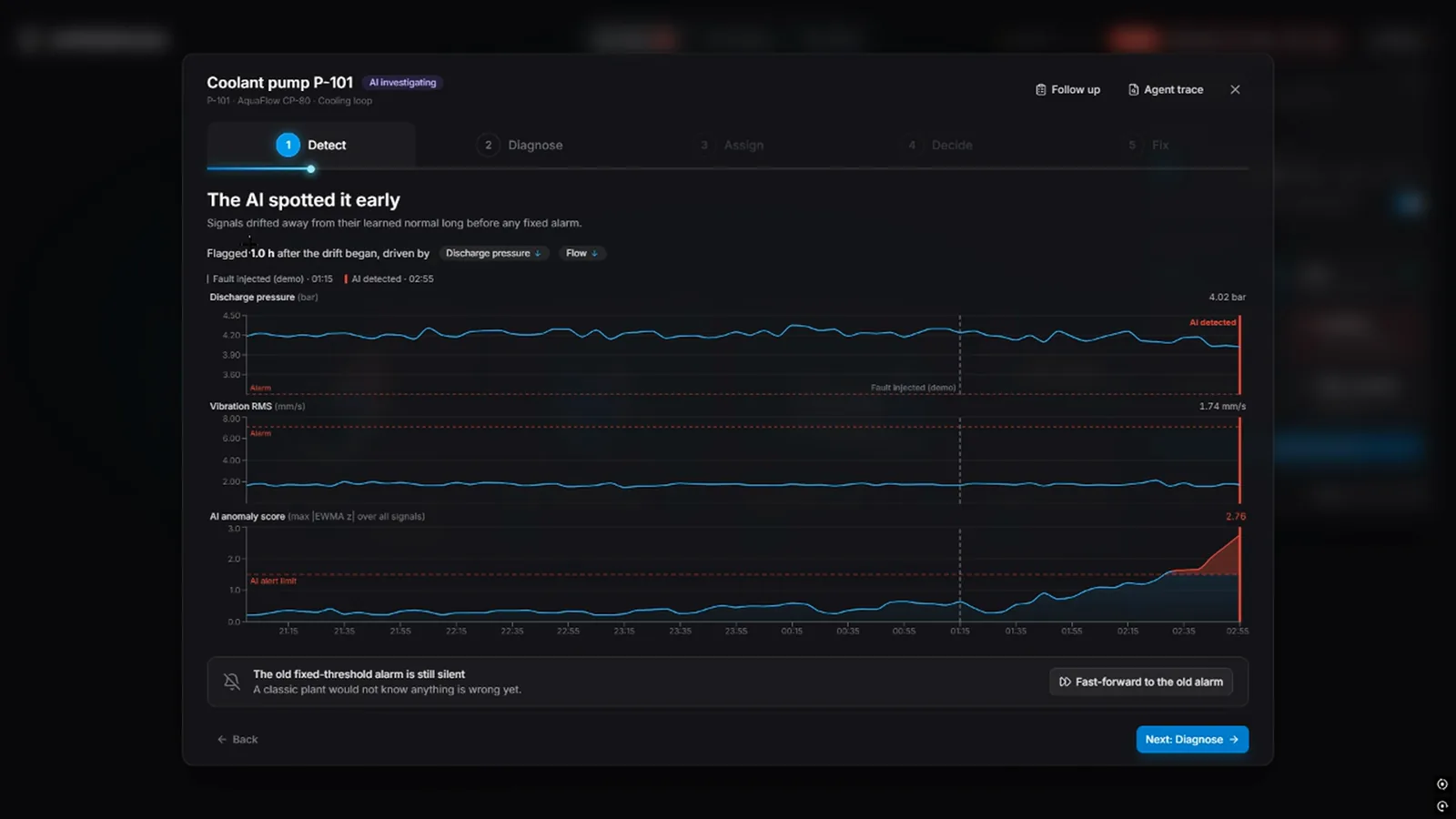
02:40, night shift. A coolant pump starts losing suction. Nothing on the panel is red: pressure has dipped a little, flow is slightly down, both well inside their limits. The fixed alarm will not fire for another day, and when it does it will say what tripped, not why.
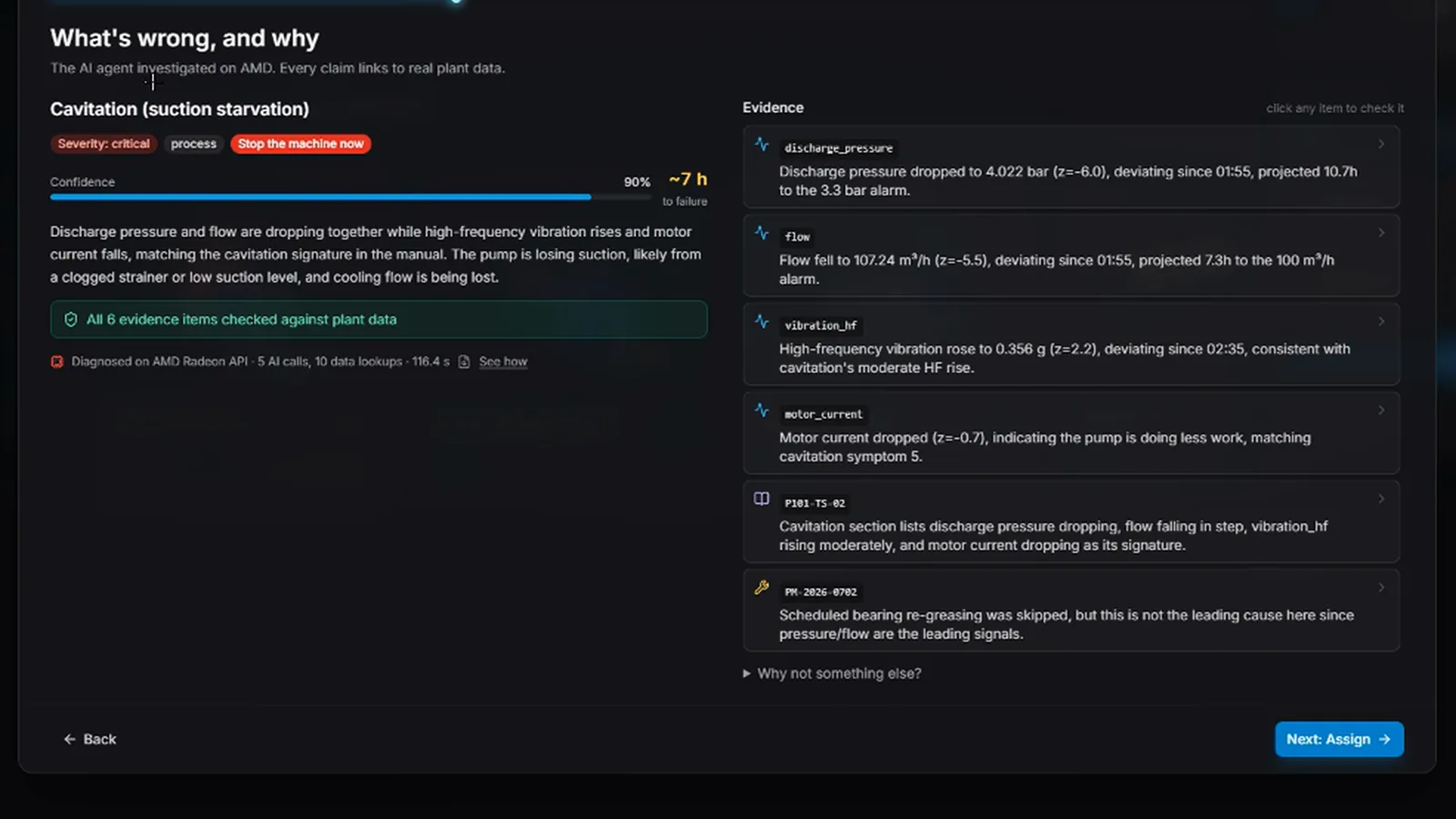
I owned the agent. It reads the sensor trends, the maintenance history, the pump manual and the spare-parts stock, then names the fault: cavitation, 85% confidence, about 7 hours to failure. Stock levels always come from inventory, never from the model.
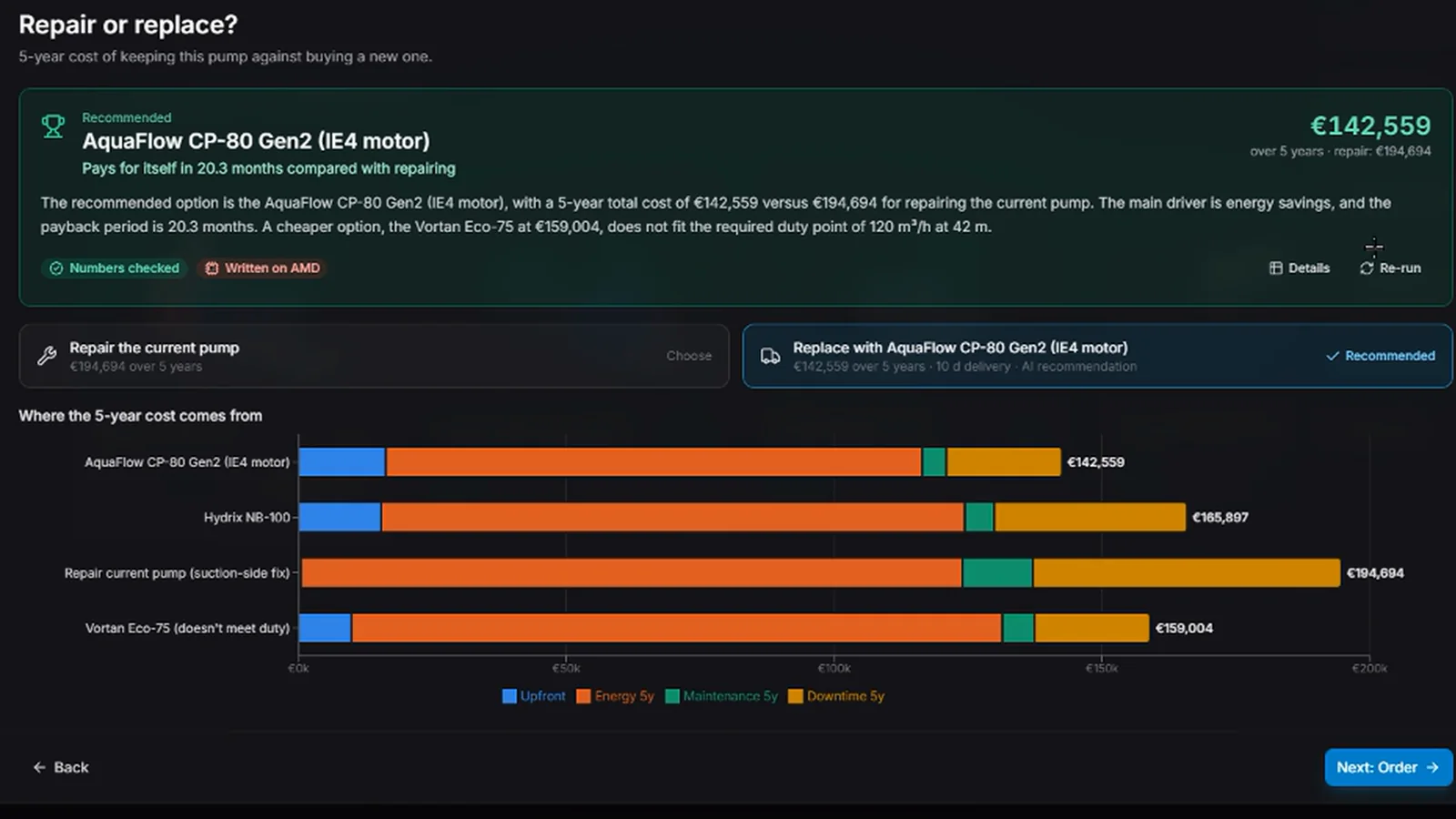
The supervisor then gets a five-year comparison: €142,559 to replace against €194,694 to keep repairing, paying back in 20 months.
What it refuses to doPaging anyone on unverified evidence. Every reference the agent cites is checked against plant data, and a bad one goes back to the model for a retry.
How it runs
- DetectLoad-regressed robust z-score plus EWMA. Plain math, every number readable.
- DiagnoseThe agent investigates on AMD and cites evidence for every claim.
- VerifyThe backend checks each reference against plant data before anyone is paged.
- AssignRoutes to the right person for that fault category, area and shift.
- DecideFive-year repair-versus-replace, with the numbers computed in code.
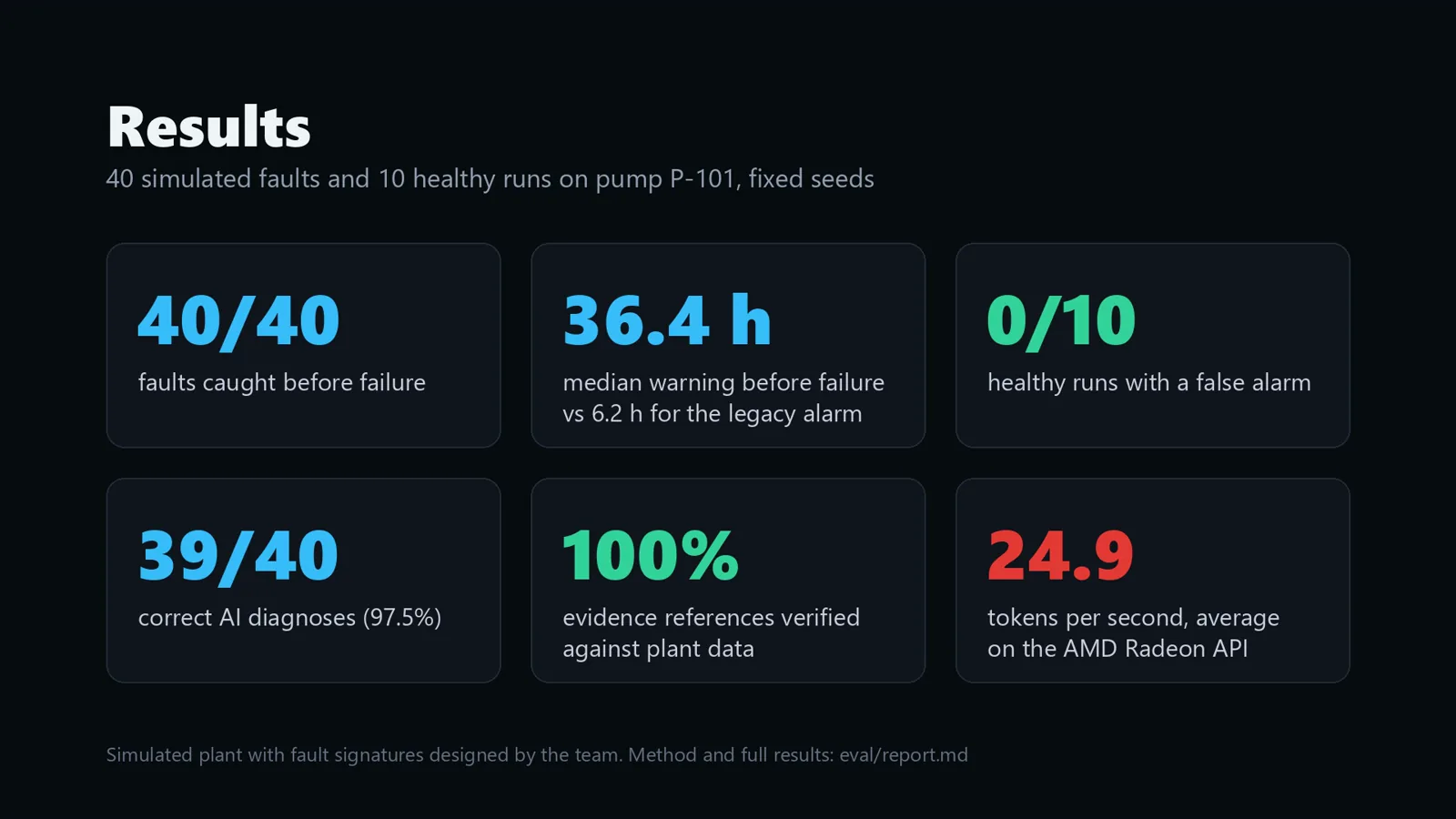
Honest caveatThe plant is simulated and the team designed the fault signatures. The repo says so too.
Next fileFleetSense →